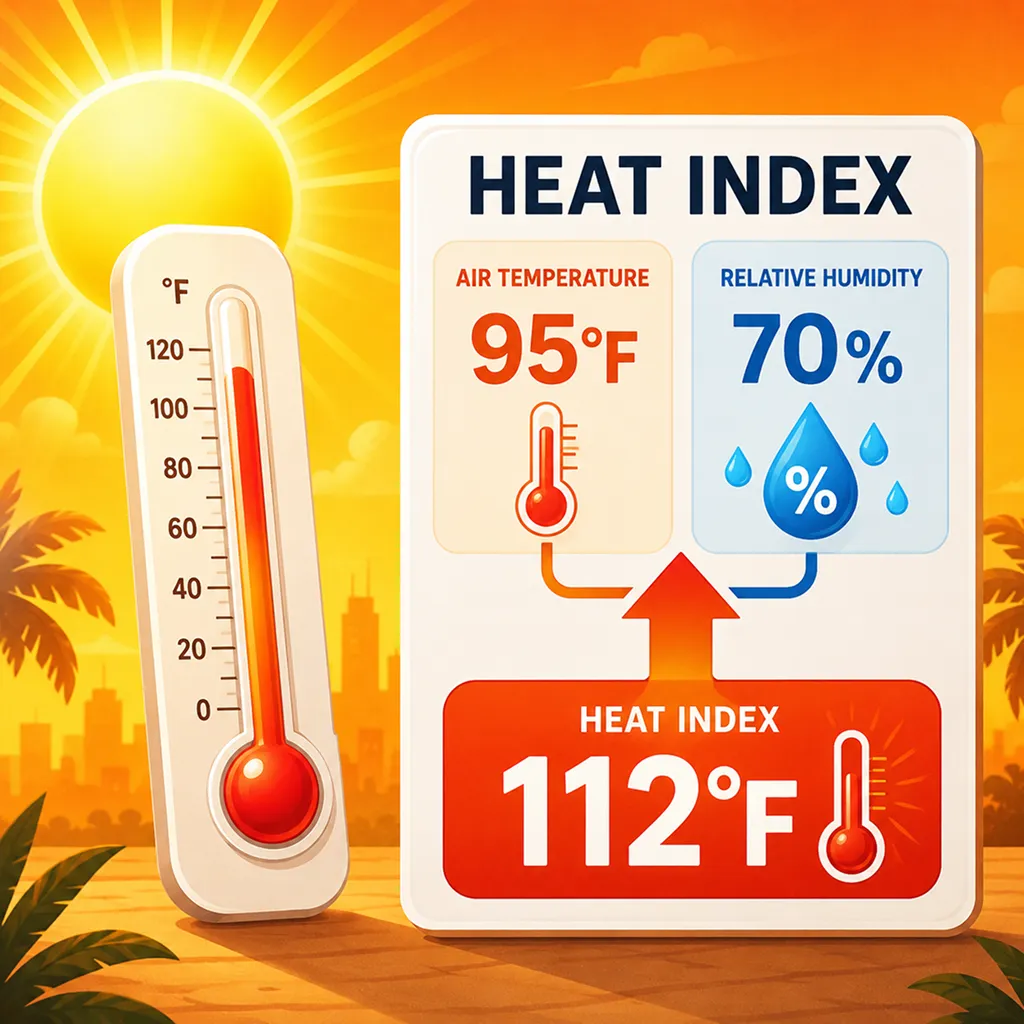
Enter the air temperature and relative humidity to estimate the heat index, commonly shown as the “feels like” temperature. This calculator also compares shade and direct-sun exposure, risk level, outdoor activity guidance, dew point, and cooling tips.
What is the heat index?
The heat index is a “feels like” temperature that combines air temperature and relative humidity. On a humid day, sweat evaporates more slowly, so your body has a harder time cooling itself. That is why 92°F with high humidity can feel much hotter than 92°F in dry air.
Heat index risk chart
The table below summarizes common heat index ranges. Actual weather advisories and warnings may vary by local area, region, time of year, overnight lows, and duration of the heat event.
Shade vs direct sun
Heat index values are generally based on shady, light-wind conditions. In real life, many summer situations happen in parking lots, sidewalks, sports fields, amusement parks, outdoor job sites, beaches, and other places with direct sunlight.
This calculator lets you compare a standard shaded estimate with a direct-sun planning estimate. The direct-sun number should not be treated as an official forecast value, but it can help you make safer decisions before long walks, outdoor workouts, yard work, sports practice, or travel.
How to use this Heat Index Calculator
- Enter the air temperature. Fahrenheit is selected by default.
- Enter relative humidity. Weather apps often show this as “Humidity.”
- Choose Shade / light wind or Direct sun estimate.
- Review the calculated heat index, risk level, dew point estimate, and outdoor activity guide.
Heat index vs feels like temperature
Heat index focuses on how hot the air feels when temperature and humidity are combined. Feels like temperature is a broader phrase used by many weather apps and services. Depending on the weather service, it may also consider wind, sun, cloud cover, or other local factors.
This calculator is most useful on hot, humid days when sweat does not evaporate easily. On cooler days, windy days, or dry desert-like conditions, the number may not describe comfort as well as a local forecast or a full weather model.
When the heat index becomes dangerous
A high heat index can increase the risk of heat cramps, heat exhaustion, and heat stroke, especially during prolonged exposure or physical activity. Risk is higher for children, older adults, outdoor workers, athletes, people with certain health conditions, and people without access to reliable cooling.
Warning signs such as confusion, fainting, hot skin, vomiting, severe weakness, or a very high body temperature should be treated seriously. This calculator is for planning and education only and does not replace local weather alerts, medical advice, or workplace heat-safety rules.
Practical ways to lower heat stress
- Move strenuous activity to early morning or evening when possible.
- Take shade or air-conditioning breaks before you feel overheated.
- Drink water regularly, especially during outdoor work or exercise.
- Wear lightweight, breathable clothing and reduce direct sun exposure.
- Check parked cars, pavement temperature, and shaded rest areas when children or pets are involved.