What is a refinance calculator?
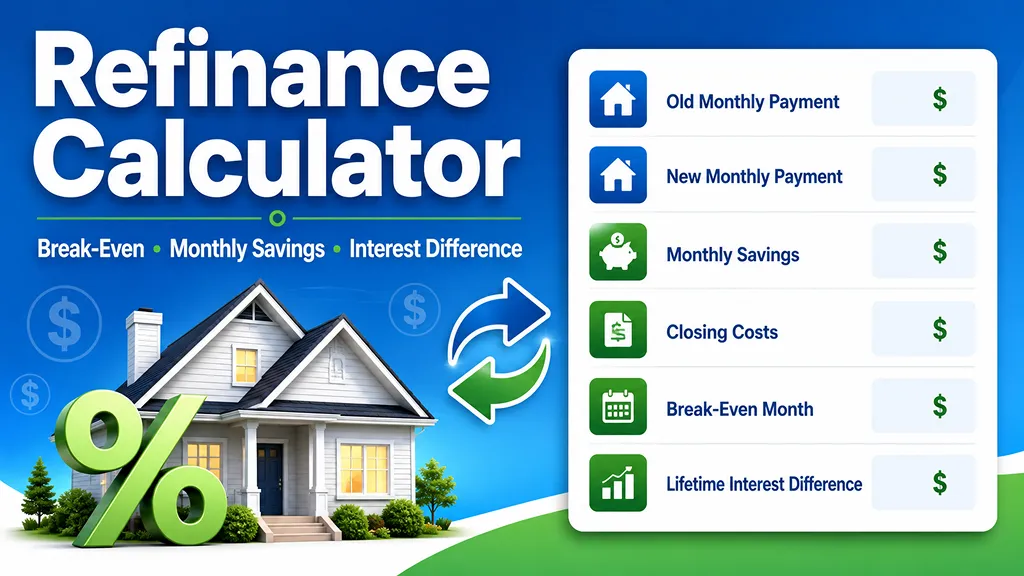
A refinance calculator compares your remaining mortgage with a proposed new loan. Mortgage refinancing replaces the existing mortgage with a new loan, usually to change the interest rate, monthly payment, loan term, or access equity. The key question is not only whether the new payment is lower, but whether the savings are large enough to recover the closing costs and whether the new loan costs less over the period you expect to keep it.
This calculator focuses on the three figures that are easy to miss when looking only at a new monthly payment: break-even time, remaining lifetime interest, and net savings after closing costs. It also shows a planned-stay comparison so you can test a scenario such as “What if I sell or refinance again in five years?”
How the refinance monthly payment is calculated
Both the current and new loan use the standard fixed-payment principal-and-interest formula:
is the monthly principal-and-interest payment, is the loan principal, is the monthly interest rate, and is the number of monthly payments. If you choose to roll closing costs into the new loan, those costs are added to the refinance principal before the new payment is calculated.
How the refinance break-even point is calculated
A common rough break-even estimate divides refinance costs by the monthly payment savings:
For example, if closing costs are $6,000 and the new loan saves $250 per month, the simple break-even point is about 24 months. If you expect to replace the loan again before that point, the monthly savings may not have had enough time to recover the stated refinance costs.
Why a lower monthly payment can still cost more
Refinancing can reduce the payment for two different reasons: a lower interest rate, a longer repayment term, or both. If you have 20 years left and refinance into a new 30-year loan, the payment may fall even when the total interest paid from today forward increases. That is why this calculator compares the remaining term of the current loan with the full term of the new loan and shows a separate net lifetime savings after closing costsresult.
Closing costs: upfront vs. rolled into the loan
Refinance costs can include lender charges, appraisal or valuation costs, title and settlement services, government recording charges, prepaid items, and discount points depending on the transaction. Fannie Mae’s consumer refinance calculator notes that refinancing typically costs about 2% to 5% of the new loan amount, although the actual amount varies by loan, lender, location, and borrower.
If you pay costs upfront, the calculator treats them as immediate cash outflow. If you finance the costs, they are added to the new principal. Financing can reduce cash needed at closing, but you may also pay interest on those financed costs over time.
The planned-stay comparison: a more useful refinance check
A simple break-even formula only compares upfront costs with monthly payment savings. The optional planned stay field adds another view: at the selected month, the calculator compares payments made plus the remaining payoff balance on each loan. Upfront closing costs are included, while financed closing costs are already reflected in the new loan balance.
This can be especially useful if you expect to sell the home, pay off the mortgage, or refinance again before the new loan reaches maturity. It also reduces the risk of treating a 30-year term reset as “savings” just because the monthly payment is lower.
What this calculator includes and excludes
The comparison is designed for fixed-rate principal-and-interest analysis. It includes your current balance, current rate, remaining term, new rate, new term, closing costs, and whether those costs are paid upfront or financed. It does not estimate qualification, credit score effects, cash-out proceeds, taxes, insurance, PMI changes, escrow refunds, prepayment penalties, tax deductions, adjustable-rate changes, or lender-specific APR.
For a detailed month-by-month balance schedule or extra-principal payoff analysis, use the Amortization Calculator.
How to compare refinance offers
- Use the same payoff goal. Compare a 20-year remaining loan with both a 20-year and a 30-year refinance so you can separate rate savings from term extension.
- Enter real closing costs. Replace generic estimates with the fees and credits shown on your lender’s Loan Estimate.
- Compare APR and cash to close too. The note rate alone does not capture every fee or credit in the transaction.
- Check your expected holding period. A refinance that looks attractive over 30 years may not recover its costs if you plan to move soon.
- Watch for term resets. Lower payments are useful for cash flow, but a longer term can increase the time you remain in debt.
Refinance references
This calculator is for educational estimates only and is not a loan offer, underwriting decision, tax advice, or financial advice. Actual payments, APR, fees, credits, escrow amounts, and closing costs depend on your lender and loan terms. Review official Loan Estimates and Closing Disclosures before making a refinancing decision.
Frequently asked questions
- Q. What is a good break-even point for refinancing?A. There is no universal cutoff. The important comparison is whether you expect to keep the new mortgage long enough to pass the break-even point and whether the new loan still improves your total cost or other financial goal.
- Q. What if the new monthly payment is lower but lifetime interest is higher?A. That often means the new term is longer. The refinance may improve monthly cash flow while increasing total financing cost. Check the term-change warning and net lifetime savings result.
- Q. Should I include closing costs if the lender says there are “no closing costs”?A. Review the Loan Estimate carefully. Some offers reduce upfront cash by using a higher rate, lender credits, or by financing costs. Enter the costs that are actually part of your transaction and compare the rate and payment at the same time.
- Q. Does this calculator include property tax, insurance, or PMI?A. No. It compares principal and interest because taxes, homeowners insurance, PMI, and escrow can change independently. Include those items separately when planning your full monthly housing budget.
- Q. Can I use this for a cash-out refinance?A. This version is designed for rate-and-term refinance comparisons. A cash-out refinance changes the loan balance for reasons beyond closing costs, so it should be modeled with the actual new principal and additional cash-out assumptions.